Culture
What Modern Britain Gets Wrong About Folk Traditions
By James Whitmore · 2026-04-02 · 8 min read
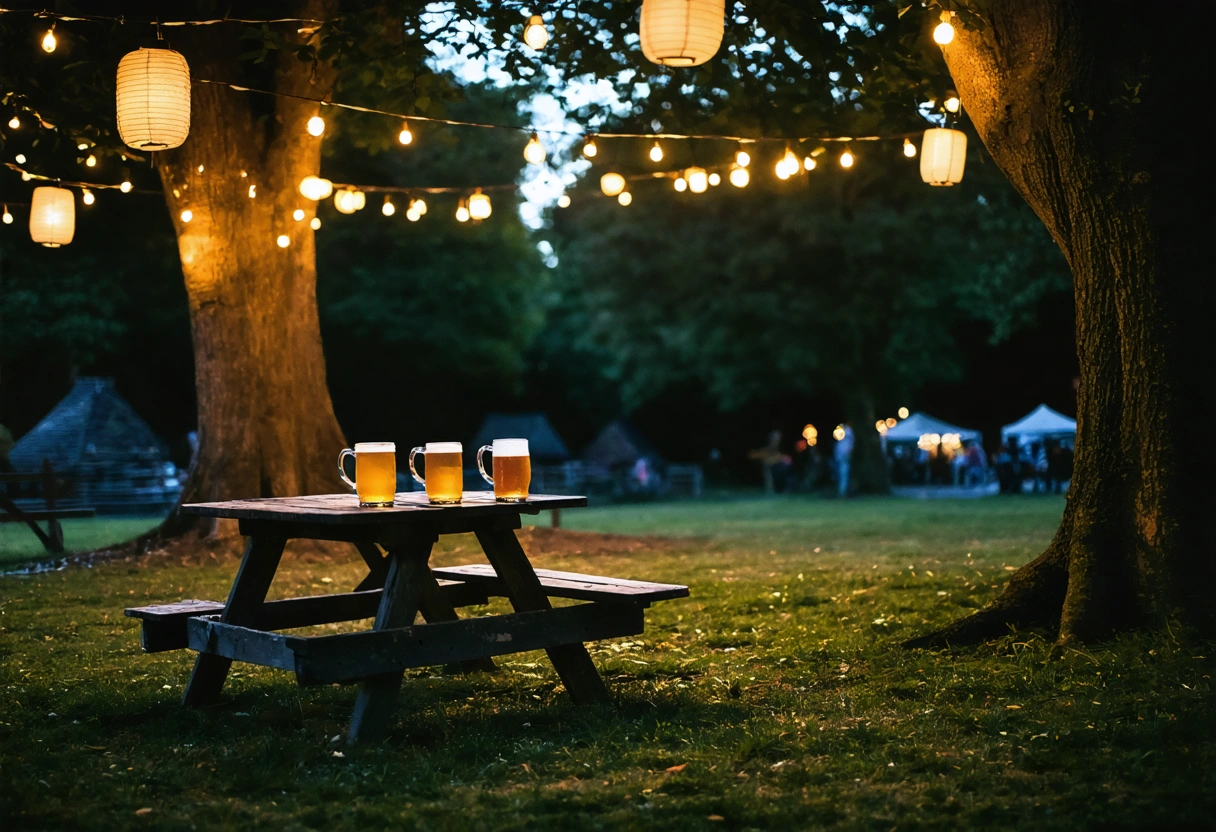
The standard popular picture of British folk traditions — ancient pagan survivals, dying out under modern pressure — is wrong on most counts. The reality is more interesting and considerably more alive.
The image of British folk custom that circulates in the wider culture is heavily shaped by the late-Victorian folklorists who first systematically recorded it. They tended to assume that everything they saw was a dim survival of a much older pagan past, and that it was disappearing rapidly under industrialisation. The first assumption is mostly wrong; the second has been wrong for over a century.
In 2026, British folk customs are flourishing, evolving, and in many cases being newly invented. The clearer view requires unpicking several assumptions that have hardened into received wisdom.
Are most folk customs ancient?
Mostly no. The honest history is that the great majority of recognisable British folk customs date from the 18th, 19th, or even 20th centuries — not from the medieval period and certainly not from before the conversion to Christianity.
Morris dancing in its current form is largely a Victorian and Edwardian revival, codified by Cecil Sharp in the early 1900s from older but already attenuated traditions. The Padstow Obby Oss, while genuinely old, is documented from the late 18th century and has changed substantially since. Many "ancient" village customs were either created in the Victorian era as deliberate civic fiction or are 20th-century reconstructions.
This is not a deflation. The customs are not less interesting for being recent. But the framing of "unchanged from time immemorial" rarely matches the documentary record.
Are folk traditions dying out?
The opposite. The 2010s and 2020s have seen a substantial expansion in active folk participation across Britain. New morris sides have formed; the wassail revival has spread well beyond its West Country heartland; new folk festivals have started; and the participatory folk-music scene has grown materially in size.
The Folk Music Society's membership figures, the English Folk Dance and Song Society's data, and the rolls of various morris and dancing federations all tell the same story: more participants, more events, more variety than at almost any point in the post-war period.
What has changed is who participates. The folk scene is no longer the rural, conservative scene of the post-war revival. It is younger, more urban, more diverse, and more politically varied than the cliché suggests.
What about regional differences?
These are stronger and more interesting than people often realise. Cornish, Welsh, and Scottish traditions are not subsets of an English standard — they are distinct in form, function, and self-identification.
A few examples of what's flourishing:
- Wassailing in apple-growing counties — particularly Somerset, Herefordshire, and Devon — is a January custom that has expanded substantially in the past two decades. Cider orchards, communal singing, the symbolic blessing of trees.
- The Burning of the Clavie at Burghead, Moray — a January fire festival that genuinely is centuries old and continues with strong community participation.
- The Hocktide festival at Hungerford — administrative fossils combined with ritual elements, run by the town's "Tutti-men" still elected each year.
- The Allendale Tar Bar'l — a Northumbrian New Year fire procession, well attended, well documented.
- The Marshfield Mummers — a Boxing Day mumming tradition revived in 1932 and continuing strongly.
This is a tiny sample. The fuller list is in the hundreds.
What about the modern revivals?
Several customs have been invented in living memory and have become fully established:
- The annual Lewes Bonfire — substantially shaped by Victorian and Edwardian organising, expanded since 1945
- The May Day "Beltane Fire Festival" in Edinburgh — created in 1988, now a substantial city event
- The Up Helly Aa fire festival in Lerwick — Victorian invention, now central to Shetland identity
- The Christmas Carols by the Sea at various coastal towns — mostly post-1990 inventions
- The Olney Pancake Race — claimed since 1445, well-documented since 1948 in current form
Whether something is "old" or "new" matters less than whether it works as a piece of community ritual. By that measure, the new and the old often function identically.
What's the relationship to paganism?
Less than the popular framing suggests. The systematic claim that British folk customs preserve pre-Christian pagan ritual was made most influentially by James Frazer in The Golden Bough (1890) and elaborated through the 20th century by various amateur and professional folklorists. The claim has been substantially complicated by historians since.
The honest summary: a small minority of British folk customs have demonstrable pre-Christian roots. The great majority have origins in the medieval, early modern, or modern period and have been interpreted as pagan in retrospect because that interpretation was fashionable in the late Victorian era.
The modern pagan revival movements (Wicca, Druidry, etc.) are themselves 20th-century creations rather than survivals of older pagan religion. Where they intersect with folk customs, they often add interpretive layers that the customs themselves don't carry.
What's worth seeing in person?
If you want to understand British folk culture as it actually exists in 2026, a few annual events are particularly accessible:
- Padstow Obby Oss, May Day — Cornwall, large crowds, atmospheric
- Helston Flora Day, 8 May — Cornwall, dancing through the streets
- Whitby Folk Week, August — Yorkshire, accessible folk music festival
- Wassails in Somerset and Herefordshire, January — many small events, all welcoming visitors
- Allendale Tar Bar'l, 31 December — Northumbria, fire procession
For Welsh and Scottish equivalents, the calendars maintained by the National Library of Wales and the Tobar an Dualchais project respectively are good starting points.
What this means for the wider culture
Folk customs are one of the more reliable indicators of how a place sees itself. The customs that survive and grow are the ones a community actively chooses to maintain. The customs that decline are not failed by some abstract historical force; they are just not chosen.
In Britain in 2026, the customs being chosen are heterogeneous, regional, often recent in invention, and very much alive. That is a more interesting cultural picture than the standard one of dying ancient survivals.
The folk customs of Britain in 2026 are more lively, more various, and more actively created than at almost any time in the past century. The Victorian framing of them as fragile survivals from antiquity is almost entirely wrong.
What to take from this
If you have not been to a British folk event in some time, the experience is unlikely to be what you remember. The audiences are wider, the participants are younger, and the events themselves are more confident than the older revival generation. The people doing the work are mostly not amateur folklorists; they are people for whom this is simply how their community marks time.
Related Reading
- Why Regional Theatre Matters More Than You Think
Culture · 7 min
- Inside the World of Independent UK Cinema in 2026
Culture · 7 min
- Inside the World of Britain's Pubs as Community Hubs
Society · 7 min