Society
Inside the World of Britain's Pubs as Community Hubs
By James Whitmore · 2026-04-12 · 7 min read
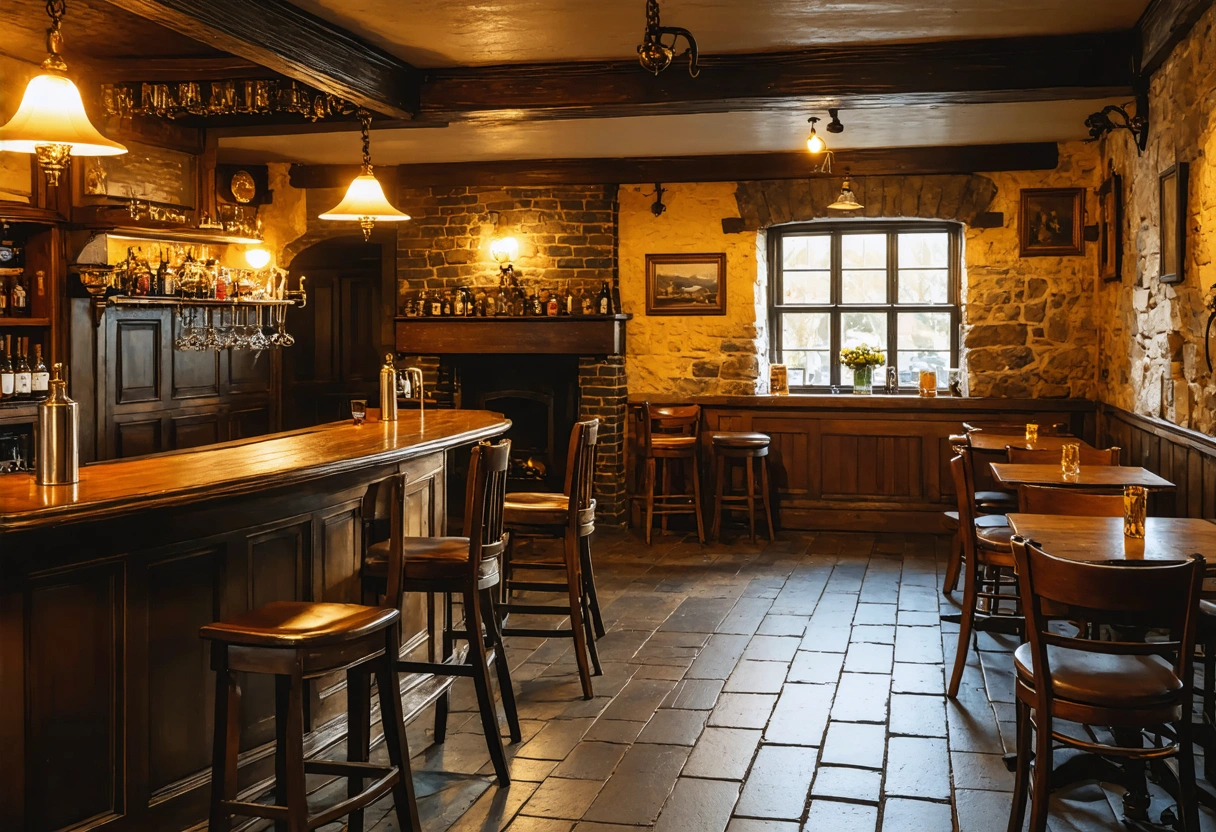
The number of pubs in Britain has fallen by roughly a quarter over the last twenty years. The pubs that survive are increasingly the ones that have stopped trying to be only pubs.
A village outside Stamford lost its last pub in 2018, and a year later, a group of residents bought it. They didn't have a pub-trade background. They had a series of meetings in the village hall, a community share offer, and a structural survey. The pub reopened in 2020 as a community-owned co-operative, and it now also operates as a post office, a parcel collection point, and a meeting room for half a dozen local groups. On Tuesday mornings, it serves coffee to a baby and toddler group; on Friday evenings, it serves beer to the same parents. The income from the post office covers most of the building's running costs.
This is not unusual. There are now over two hundred community-owned pubs in the UK, supported by intermediary organisations like the Plunkett Foundation, and the model has spread far beyond the rural villages where it started.
The shape of the decline
The headline figure is straightforward: there are roughly a quarter fewer pubs in Britain than there were two decades ago. The British Beer and Pub Association tracks the figures and the decline has continued in most years, with sharper falls during economic downturns.
The reasons are well rehearsed: rising costs, changing drinking habits (particularly among under-30s), competition from supermarket alcohol, business rates, smoking restrictions in the late 2000s, and a series of regulatory changes that increased operating overheads.
But the closures are not evenly distributed. Wet-led pubs in town and city centres — pubs whose income is mostly drinks rather than food — have closed at the highest rates. Rural pubs that have diversified into food, accommodation, or community services have closed at much lower rates. Some have actually expanded.
What the survivors do differently
Talk to any landlord who has held a pub through the last decade and the same pattern emerges. The pub is still a pub, but it is also several other things:
- A daytime café — usually serving food from breakfast onward, not just lunch
- A meeting space for local groups, sometimes free of charge
- A parcel pick-up point for one of the major delivery networks
- A small shop selling essentials when the village shop has closed
- An overnight space for travellers, particularly on cycling and walking routes
None of these activities individually transforms the pub's economics. Together, they spread fixed costs across more revenue streams and embed the pub in a wider set of local relationships. The pub becomes structurally harder to lose.
What community ownership actually involves
Community ownership is not a romantic shortcut. The successful examples follow a recognisable pattern: a small steering group, a feasibility study, a community share offer, and an honest negotiation with the previous owners over price.
The Plunkett Foundation provides templates and support. The legal vehicle is usually a community benefit society, which limits how shares can be sold and protects the community's interest in the building. Government and Lottery funding can sometimes co-invest with community shares.
The hardest part of these projects is rarely the money. It's finding a manager who can run a pub well as a business. Community ownership of the building doesn't replace the need for someone to know how to run it.
What might happen next
The decline in conventional pub trade is probably structural and unlikely to reverse. The growth in pubs-as-something-else is also likely to continue, because the underlying economics support it: fixed costs spread across more uses, deeper community embeddedness, and lower vulnerability to single-revenue downturns.
A useful indicator for any community considering whether their local pub is at risk: ask the landlord what they did during the slowest week of the year. If the answer is "we closed for three days", the pub is fragile. If the answer is "we hosted the village book club, the running club, and a wake", the pub is probably safe.
The British pub is not disappearing. The British pub that does only one thing is disappearing. The British pub that does several things — quietly, locally, often unprofitably individually — is not.
What this means for everyone else
For people who don't live in villages with community-owned pubs, the relevant point is broader. The institutions that hold British community life together — pubs, post offices, libraries, churches, sports clubs — are increasingly surviving by becoming hybrid. They borrow each other's functions. They share spaces, footfall, and overheads. The boundaries between them are softer than they used to be.
That hybridisation is not a failure of those institutions. It is, on a longer view, probably their salvation.
Related Reading
- 10 Things UK Residents Should Know About the Changing High Street
Society · 8 min
- How Volunteering in the UK Has Quietly Reshaped Itself
Society · 8 min
- What Modern Britain Gets Wrong About Folk Traditions
Culture · 8 min